The appointment is booked for “just vaccines.”
Then, somewhere in the conversation, the client adds: “Oh, and she’s been vomiting.”
There it is—the information that may change how the patient should be scheduled, prepared for, or routed through the clinic’s approved process.
Clients do not always know which details matter. That is not a reason to blame them. It is a reason to ask better questions.
A veterinary client service representative does not need to diagnose over the phone. The front desk does need to create enough space for the client to tell the whole story, document what was reported, and move the information to the appropriate team member.
WHY “ANYTHING ELSE?” OFTEN DOES NOT WORK
“Anything else?” sounds efficient, but it can feel like a closing question. A worried or distracted client may hear it as, “Are we finished?” and answer no—even when something important has changed.
More open wording gives the client a clearer invitation:
- “What else has been going on with her?”
- “Are there any medical concerns you want the team to know about?”
- “Has anything changed since the appointment was scheduled?”
- “What are you most worried about today?”
The goal is not to perform a complete medical history at the front desk. The goal is to identify information that may change the next step under the hospital’s current protocol.
THE CLIENT MAY NOT KNOW WHAT COUNTS AS A MEDICAL CONCERN
A client calling for vaccines may not realize that vomiting, diarrhea, coughing, sneezing, appetite changes, unusual thirst, difficulty urinating, weakness, breathing changes, pain, or a major behavior change could affect the visit plan.
AAHA guidance recognizes receptionists and client-service coordinators as an owner’s frequent first interaction with the practice. It also emphasizes communication resources, telephone-triage skills, and established workflows for recurring calls. AAHA’s infection-control guidance includes screening questions about acute vomiting, diarrhea, coughing, sneezing, fever, travel, boarding, and exposure history when appointments are made.
That does not mean every CSR should improvise a universal symptom checklist. It means the hospital should decide which questions its front-desk team asks, what answers require escalation, and where that information is documented.
USE THEVETCSR’S FOUR-STEP FRONT-DESK FLOW
1. Ask
Use one open question before closing the appointment conversation:
“Before I finish scheduling, what else has been going on with your pet?”
If your clinic has a veterinarian-approved screening script, follow it. Avoid stacking so many questions that information gathering becomes a delay.
2. Listen
Listen for the client’s actual observations. “She seems off” is a starting point—not a useless answer.
A calm follow-up might be:
“Tell me what looks different from normal.”
Give the caller enough time to describe what they see. Do not turn their description into a diagnosis.
3. Document
Write what the client reported in clear, observable language.
Compare:
- Too vague: “Dog is sick.”
- Too interpretive: “Probably ate something bad.”
- More useful: “Owner reports three vomiting episodes since 6 a.m.; patient is quieter than normal and ate only part of breakfast.”
Include the timeline, meaningful changes, current status, best callback number, and what the client was told about the next step. When a detail is unknown, write “unknown” or “owner unsure” instead of guessing.
4. Route
Move the information through the clinic’s approved communication path. Depending on hospital policy, that may mean transferring the call, placing the message in a clinical queue, asking a technician or veterinarian to review it, changing the appointment type, or using an established arrival process.
The medical team determines urgency and medical recommendations. The CSR protects the handoff by making the concern visible.
WHAT THE FRONT DESK SHOULD NOT PROMISE
A strong intake conversation does not require the CSR to say:
- “That sounds fine for vaccines.”
- “It is probably nothing.”
- “The doctor will definitely approve the vaccines.”
- “You can wait until the scheduled appointment.”
- “This is an emergency.”
Those statements move beyond information gathering into medical judgment or promises the CSR may not be authorized to make.
A safer bridge is:
“Thank you for telling me. I’m documenting that change and routing it through our medical team’s process so we can confirm the appropriate next step.”
THE “OH, BY THE WAY” WILL STILL HAPPEN
Sometimes the front desk asks beautifully, documents carefully, and the client still saves an important detail for the examination room.
That does not automatically mean the CSR failed.
People remember information late. They may feel embarrassed, may not recognize the significance of a symptom, or may think the veterinarian is the only person who should hear it. The goal is not perfect information every time. The goal is a repeatable process that makes complete information more likely.
A FIVE-MINUTE TEAM EXERCISE
At the next front-desk huddle, choose one routine appointment type—vaccines, nail trim, recheck, medication pickup, or preventive testing—and ask:
- What new information could change how this appointment is handled?
- Which question should the CSR ask before ending the call?
- Where should the answer be documented?
- Who owns the next decision?
- What should the client expect after the information is routed?
If five team members give five different answers, that is useful information. The clinic may need a clearer workflow—not a receptionist who somehow reads everyone’s mind.
CLIENT COMMUNICATION IS PATIENT CARE
The front desk is where the client’s story first enters the hospital. Better wording can reveal a concern earlier, give the medical team a cleaner handoff, and help the clinic prepare more appropriately.
Ask. Listen. Document. Route.
Not diagnose. Not minimize. Not promise. Just make sure the right information reaches the right person at the right time.
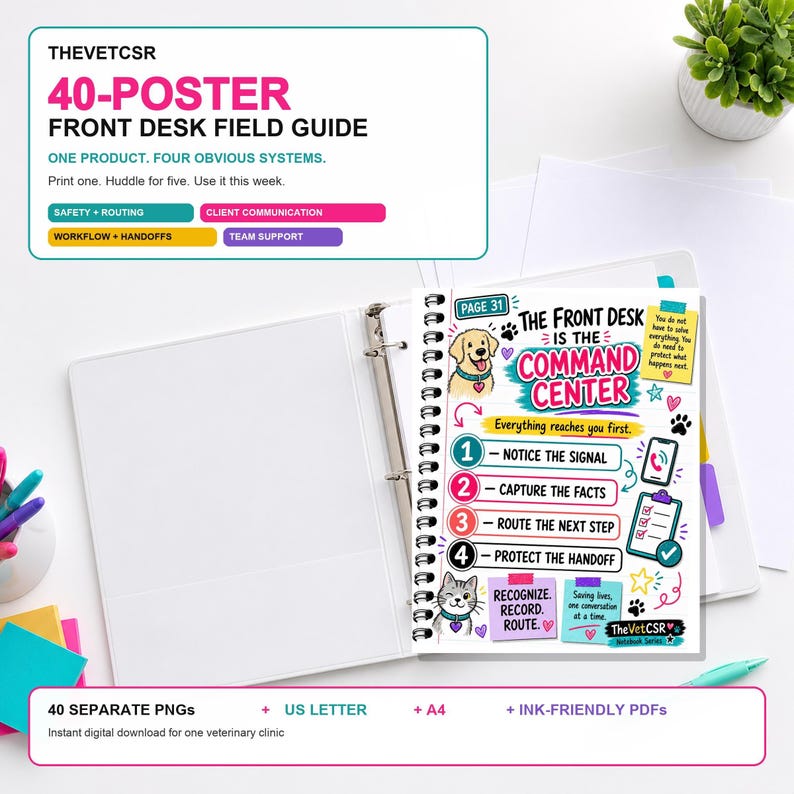
Want printable visual reminders for your veterinary front desk? The TheVetCSR 25 Veterinary Receptionist Posters + 5 Bonus Visual Aids bundle includes client-communication prompts, phone scripts, workflow tools, anatomy and safety visuals, boundary language, and front-desk support in an instant digital download.
Continue reading: Veterinary Front-Desk Call Training: A Recognize, Record, Route System and Veterinary Front-Desk Training That Sticks: The One-Poster Practice Loop.
SOURCES
- AAHA: Veterinary receptionists—Managing tasks, emotions, and more
- AAHA: The Team Approach
- AAHA: Standardized Workflow for Optimal Utilization
- AAHA: Identifying High-Risk Patients by Phone
- AVMA: The Veterinary Health Care Team
Educational scope: This article supports veterinary front-desk communication, documentation, and routing. It does not diagnose illness, provide treatment or emergency directions, replace veterinarian judgment, or override applicable law or your clinic’s current protocols. Medical-accuracy and clinic-protocol review are required before adopting any sample wording.